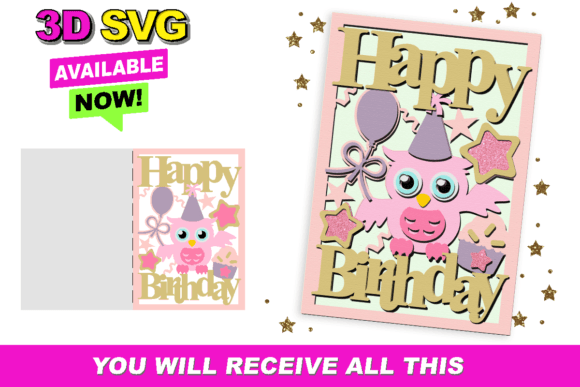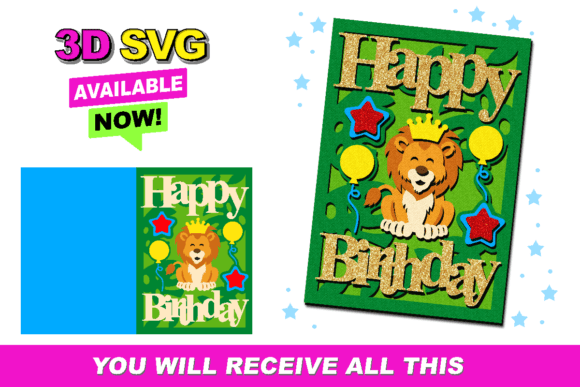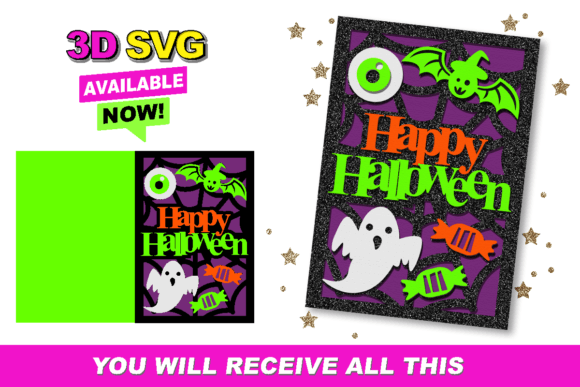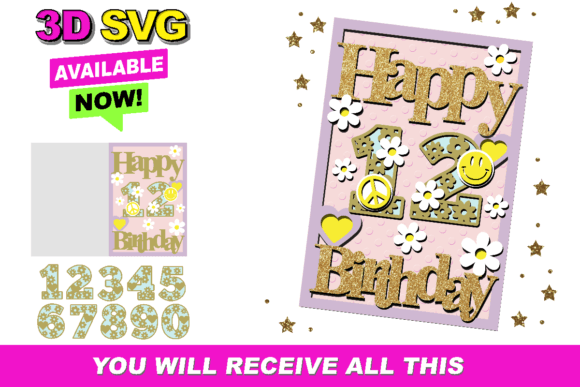
Happy Birthday Card Mermaid: A Designer's Review of This 3D SVG Asset
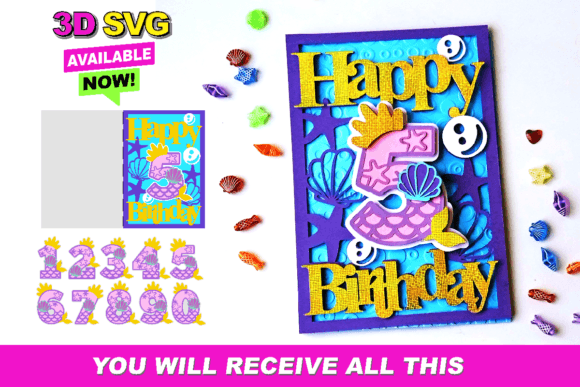
When a new client brief lands on my desk—a boutique kids' party planner wanting to refresh her birthday package branding—my first task is to scour my assets for something that captures whimsy without being childish. Opening the Happy Birthday Card Mermaid file, my immediate impression is one of layered charm. This isn't a flat clipart; it’s a dimensional graphic design asset with a sense of depth. The style leans into a playful, magical realism that feels perfect for audiences who value a handmade business aesthetic, yet it carries a polish that suggests professional illustration.
The Mood It Creates and The Projects It Naturally Suits
This beautiful card design evokes a sense of celebration and fantasy. The visual elements feel curated for a joyous occasion, making it a natural fit for projects centered around children’s brands, creative marketplaces like Etsy, seasonal campaigns for summer or birthday months, and any product line needing a touch of enchantment. For my party planner client, it immediately suggested a direction: this could anchor her new suite of printable invitations, party favor tags, and social media graphics. It represents a style that bridges illustrative detail and clean vector art, thanks to its 3D SVG foundation.
Performance in Real-World Design Applications
In practical use, a graphic’s versatility is key. I started testing Happy Birthday Card Mermaid across typical client deliverables.
Where It Excels as a Hero Graphic or Accent
For large layout areas like posters, flyers, or the hero space on a website graphic, this asset shines. Its dimensional quality adds visual interest without overwhelming. I placed it on product mockups for a themed collection of mugs and tote bags—it translated beautifully, becoming a central decorative accent. For packaging design details on a birthday candle box or sticker design for party kits, it provided that crucial, unique visual. In digital ads and Pinterest pins aiming for high emotional appeal and audience engagement, it immediately draws the eye.
Supporting Roles in Marketing and Editorial Design
As a supporting brand element within a broader campaign, it works well. Imagine it paired with a clean sans-serif font for text on an invitation, or as a recurring motif in a blog series about party themes. For print-on-demand sellers, this SVG design is easy to cut on machines like Cricut, making it ideal for physical products like intricate card stock invitations or sublimation designs for t-shirt projects.
Considerations for Careful Application
Not every asset fits every context. With this mermaid design, caution is needed in several scenarios. In small sizes—like a tiny logo design on a business card—the finer details may become lost or muddy. In crowded layouts with complex backgrounds, its intricacy could fight for attention and disrupt visual hierarchy. For minimalist branding or professional corporate materials, it would likely feel out of place. Projects requiring very clean visual hierarchy, like a formal editorial design layout, might find it too decorative.
Readability, Brand Consistency, and Professional Impression
When integrating such a distinct asset into commercial design work, its effect on the overall project is significant. Its strong personality can enhance brand recognition for the right audience but could clash with an established, sober brand identity. To maintain professionalism, it should be balanced with ample white space and clear, legible typography. I tested it alongside a simple sans-serif font, which grounded it, and a playful script font, which amplified its whimsy—the former created a more balanced, trustworthy feel for a small business branding project.
Practical Designer Notes Before Commercial Use
Before committing this asset to a client’s final deliverable, a series of checks are non-negotiable.
- Test in Black and White: Converting to grayscale confirms the design holds its form without color dependency, crucial for some print scenarios.
- Check Contrast on Light and Dark Backgrounds: Preview it on both to ensure readability and impact aren’t compromised.
- Preview at Small and Large Sizes: Scale it down to icon size and up to poster size. Does it remain crisp and identifiable?
- Place on Real Mockups: Drop it onto a digital ad mockup, a product packaging template, and a Canva template for social media graphics. Does it integrate smoothly?
- Test Print Quality: If the project involves printable designs or packaging design, a physical print test is essential to see how the 3D layers translate.
- Review File Formats and Editability: As a 3D SVG, confirm the vectors are clean and easily editable in your software for any necessary color or shape adjustments.
- Confirm Commercial Licensing: Absolutely verify the license allows for use in client or business projects before finalizing any concept.
For my imaginary party planner client, after these tests, Happy Birthday Card Mermaid proved suitable. It established the visual mood she wanted, offered flexibility across her needed touchpoints—from digital product listings to printable wall art—and, when applied thoughtfully, elevated the overall polish of her project concept. It serves as a reminder that even a single, well-crafted design asset can provide a strong creative foundation for a cohesive visual campaign.